
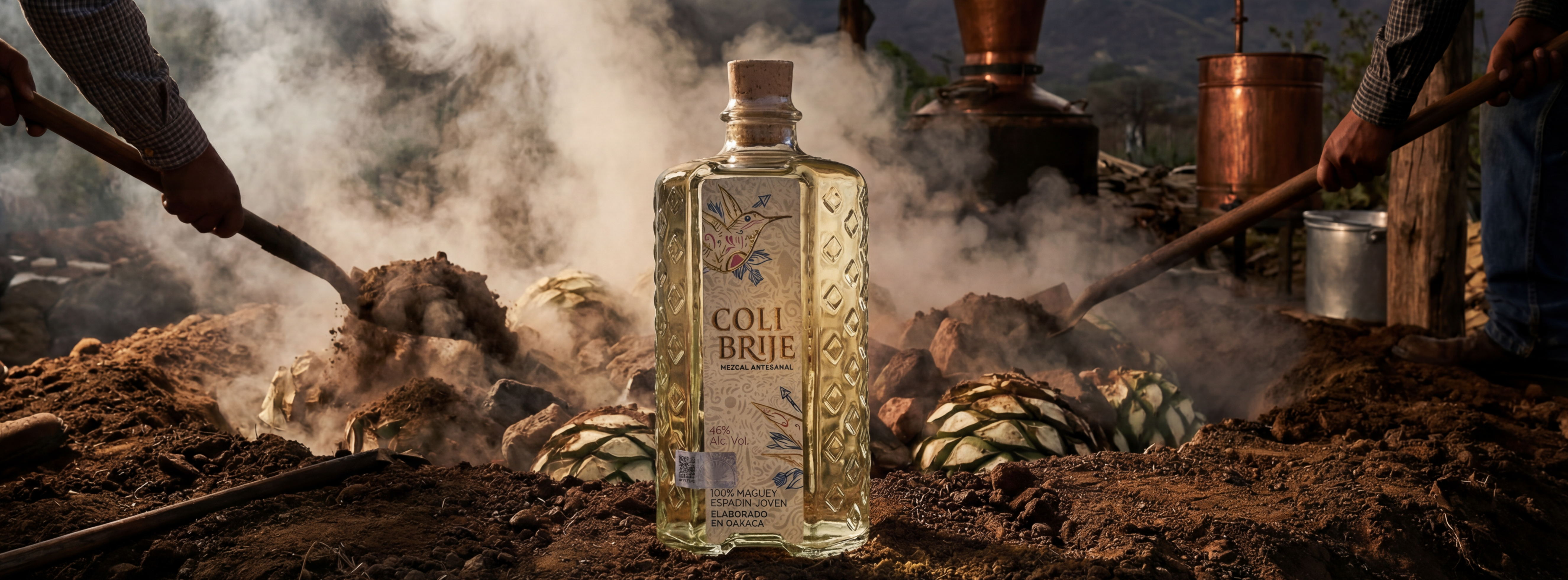
Mezcal Colibrije Espadin Joven
Artisanal purity, spirit of community.
Each bottle of Colibrije Espadin Joven is a tribute to the ancestral art of mezcal. Crafted with hand-selected espadin agaves, grown in Oaxaca's rich soils, this mezcal reflects an absolute dedication to quality, from the land to the liquid soul that reaches your glass.
Our commitment goes beyond flavor:
Premium raw material, cultivated sustainably with respect for the natural agave cycles.
100% artisanal process, cooked in a stone conical oven, milled with tahona, and naturally fermented in wooden vats.
Careful distillation, guided by mezcal masters who balance tradition and sensory precision.
Colibrije Espadin Joven offers a balanced, elegant profile, with notes of subtle smoke, fresh herbs, and a citrus touch that awakens the senses.
Every sip honors the community behind it. That is why we support fair trade, creating opportunities for Oaxacan families preserving this living heritage.
A mezcal you do not just drink, you feel.
Detailed Characteristics of Common Mezcal Agaves
Mezcal diversity is largely due to the wide variety of agave species used. Each maguey, with its own maturation time and habitat, contributes a unique set of flavors and aromas to the final spirit.
| Agave | Scientific Name | Maturation (Years) | Distribution and Habitat | Flavor Profile | Additional Notes |
|---|---|---|---|---|---|
| Espadin | Agave Angustifolia | 7 - 10 | Widespread (Oaxaca and others). Cultivated. | Flavor base: neutral, smooth, slightly sweet. It allows the artisanal process (roasting, fermentation) to shape the final profile. | Most cultivated agave and the source of most mezcal production. Reference species due to fast growth and high sugar yield. |
| Tepeztate | Agave Marmorata | 25 - 35 | Wild. Grows on rocky slopes and cliffs. | Complex and intense: very marked notes of fresh herbs, white flowers, green pepper, and a slight mineral bitterness. | Highly prized for complexity. Long maturation and difficult wild harvesting make it one of the rarest and most expensive mezcals. |
| Tobala | Agave Potatorum | 10 - 15 | Wild. Grows in high, dry zones, often in partial shade. | Fine and fruity: rounded sweet notes of mango, cinnamon, leather, and wet earth, with an elegant finish. | Small plant with short, wide leaves. Wild origin and low yield per pina make Tobala mezcal a gourmet, exclusive product. |
| Madre Cuishe | Agave Karwinskii | 10 - 14 | Wild. Grows vertically in trunk-like form, almost like a tree. | Dry and earthy: mineral notes with hints of dry wood, damp soil, rubber, and a saline or astringent finish. | This species has a unique morphology, developing an elevated woody stalk before maturing. Its name is often shortened to Cuishe. |
| Coyote | Agave Lyobaa / Americana | 12 - 18 | Wild. Arid and semi-desert areas. | Balanced and spiced: harmonious blend of herbal notes, nuts, aged leather, and an oily body. | A variety sometimes confused with Mexicano agave. Produces full-bodied, complex mezcals sought by connoisseurs who appreciate spiced profiles. |